College Hill Has Three Different Boundaries, and Only One Sets the Renovation Rules
August 27, 2026
August 27, 2026
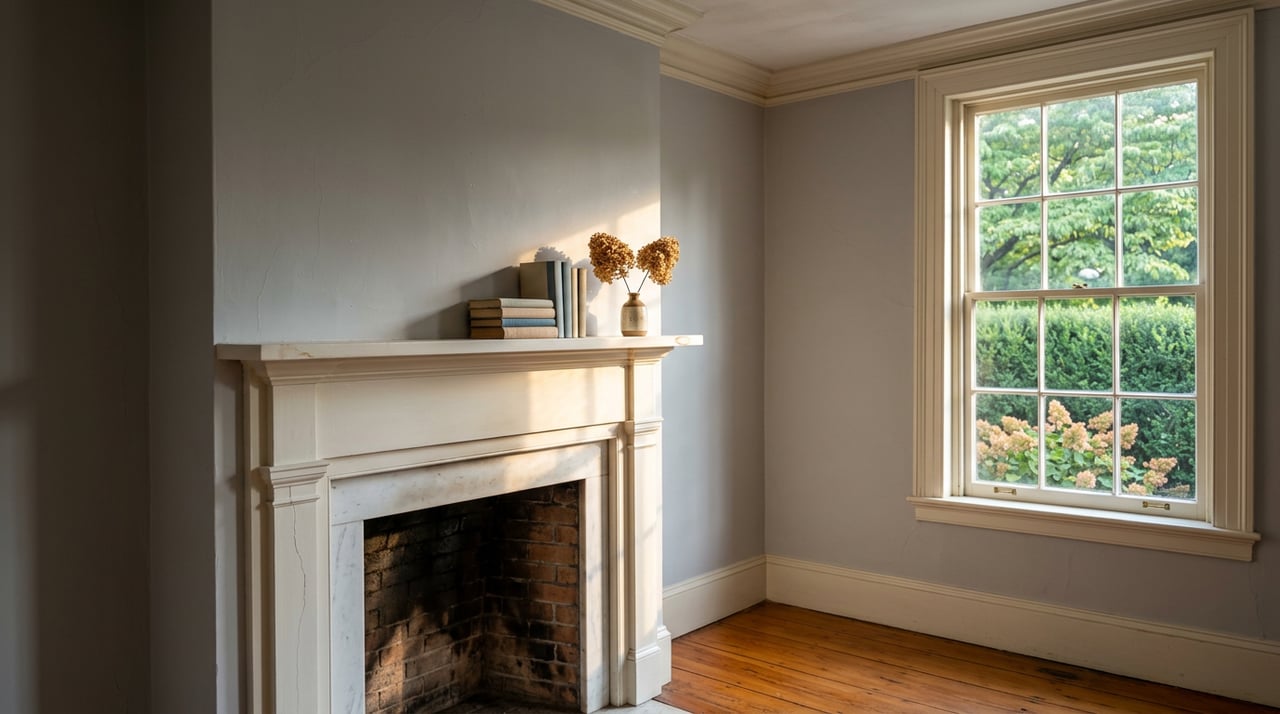
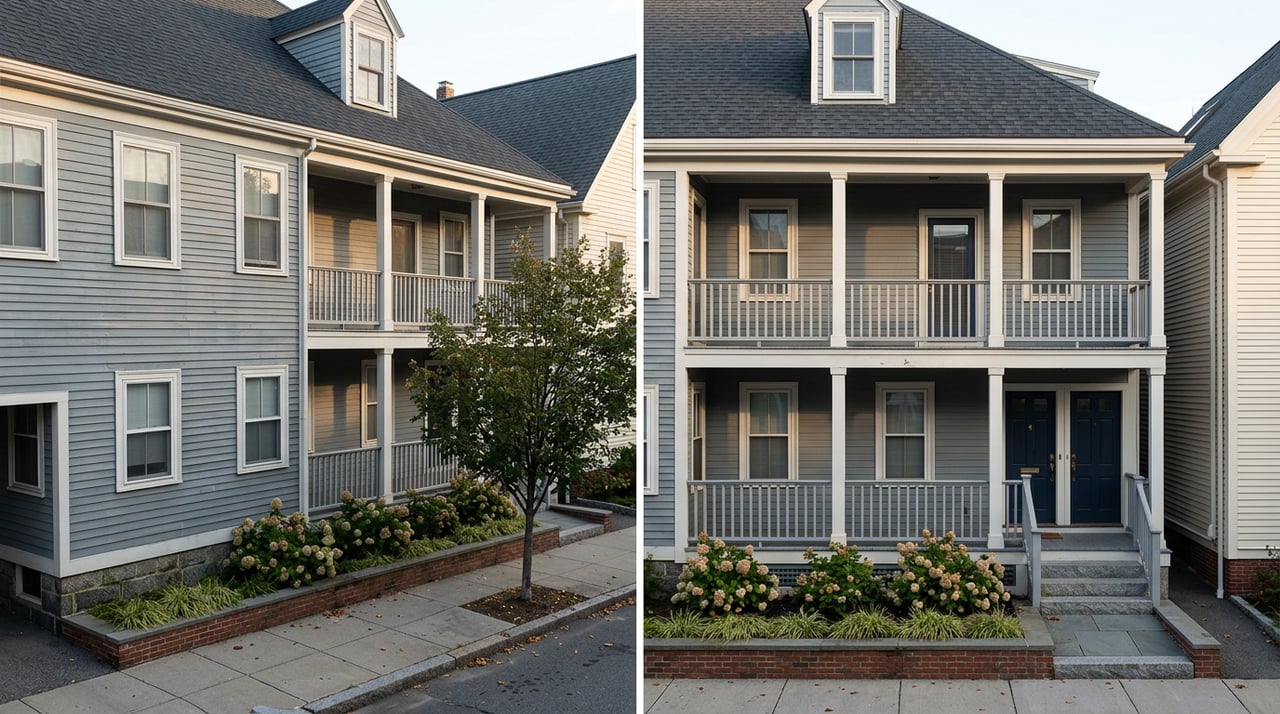
Two houses on College Hill, a block apart, both built before 1900, both with the wavy glass and dentil trim that make this part of Providence look like a textbook illustration of Federal architecture. One owner wants to replace her windows. She fills out an application, waits, and gets a decision that specifies acceptable window brands. Her neighbor a block over, outside a line she didn't know existed, replaces his windows the same month with a phone call to a contractor and a standard building permit.
Neither owner did anything wrong. They just live on different sides of a boundary that has moved twice in the last fifteen years and doesn't match the boundary that real estate sites use to calculate the number everyone quotes as "the College Hill median."
Ask three different home-search sites what a College Hill house costs right now and you'll get three different stories. One tracker showed the neighborhood's median sale price up nearly 24 percent year over year as of February 2026, landing around $940,000. A different site's trailing twelve-month figure put the median at $892,500, down 6 percent from the prior year. A third, pulling from a separate valuation model and updated in May 2026, showed typical home values in College Hill down roughly 14 percent year over year even as Providence citywide values were rising about 17 percent to a citywide typical value near $645,000 over the same stretch.
Those aren't rounding differences. They're describing three different markets and calling all of them College Hill.
Part of the explanation is simple: College Hill sells in small numbers. Redfin's own count for February 2026 put total sales in the neighborhood at 12, up from 10 the year before. When your sample size is a dozen homes, one $2.2 million sale or one distressed estate closing can swing a median by tens of thousands of dollars. But the bigger reason the numbers disagree is that "College Hill" isn't one shape. It's at least three.
Providence has three boundaries layered on top of each other in this neighborhood, and they don't do the same job.
| Boundary | Established | What it actually controls |
|---|---|---|
| College Hill National Historic Landmark District | Designated December 30, 1970 | Recognition and eligibility for certain federal programs. Does not restrict what a private owner can do to their own home unless federal money, permits, or tax credits are involved. |
| College Hill Local Historic District | Established 1960, expanded 1990, expanded again in 2021 | The only boundary that actually requires city approval before you touch the exterior of your house. This is Providence Historic District Commission territory. |
| "College Hill" as drawn by real estate search sites | Informal, varies by platform | Determines which sales get averaged into the median price you see online. Not tied to either historic designation. |
The College Hill Historic District entry on Wikipedia notes that the local district "partially overlaps" the national landmark district, which is a polite way of saying they were never meant to be the same shape. One is a National Register listing. The other is a zoning overlay with teeth.
The local district's current shape is recent enough to have a paper trail. In 2013, residents in a pocket of the neighborhood sandwiched between the existing Stimson Avenue Local Historic District and the College Hill Local Historic District approached the Providence Preservation Society. Their block had, in the Society's own description, all the characteristics of a protected historic district but none of the protections. The push for formal designation took years of study and conversation with property owners.
The proposal reached the City Council and it wasn't uncontested. Brown University initially objected to the inclusion of 28 of its own properties, arguing that a separate layer of city review was unnecessary on top of the university's existing Institutional Master Plan process. The compromise that followed, brokered with help from the Providence Preservation Society and Ward 1 Councilman John Goncalves, kept the university largely outside the new boundary but folded in one significant exception: the Orwig Music Library and Fulton Rehearsal Hall, originally the Sprague-Ladd House, an 1850s Italianate residence later remodeled in the French Baroque style, sitting between Young Orchard Avenue and Benevolent Street along with its stable block.
The City Council approved the expansion in June 2021, adding close to 90 properties along Governor, Benevolent, Angell, Hope, Manning, Cooke, George, and Young Orchard Streets to the local historic district. Homes on those streets that had been sitting one designation short of protection for the better part of a decade were suddenly subject to the same review as the rest of College Hill. Homes just outside the new line were not.
That's not ancient history for a buyer today. It's the reason a house on one side of Young Orchard Avenue plays by different rules than a house a hundred yards away.
If your address falls inside the local historic district, here's what that means in practice, based on the Providence Historic District Commission's own published standards:
Outside the local district, none of that applies. A contributing building on the National Register carries prestige and, for income-producing properties, potential access to state and federal rehabilitation tax credits, but a private owner-occupant making cosmetic changes to a one or two-family home isn't required to clear anything with the city beyond a standard permit.
This is where the boundary problem and the pricing problem meet. The home-search sites that generate the median you see aren't drawing the PHDC's regulatory boundary. They're drawing a rough neighborhood polygon that mixes protected, design-reviewed core streets like Benefit and Congdon with adjacent blocks that carry none of those restrictions and may be renovated, subdivided, or expanded with far more flexibility.
That mix is exactly why the highest sale of the year can pull the average one direction while a run of quicker, less-restricted renovations pulls it another. A Greek Revival home at 6 Olive Street sold for $2.2 million earlier in 2026, which Providence Business News reported in May 2026 as the highest single-family sale recorded in the neighborhood so far this year, citing sales data from Residential Properties Ltd. Built in 1850 with more than 6,000 square feet across multiple levels, it sits squarely inside the protected core. A different sale outside the local district, in a less restricted pocket that a search site still labels "College Hill," can post a very different price trajectory without contradicting anything. They're just not describing the same market.
If you're weighing a College Hill purchase against another part of Providence's East Side, the median isn't a useless number, but it's a blunt one. What matters more for a specific address is:
A home valuation that accounts for micro-location, not just a neighborhood-wide average, tells you more than any aggregator median will. If you want that kind of specific read on a College Hill or East Side property, our home valuation tool is a good starting point, and you can browse current thinking on the broader area through our College Hill neighborhood guide and Providence guide.
If my house has a Providence Preservation Society plaque, does that mean it's in the local historic district? Not necessarily. Most plaques come through the Society's separate marker program and don't determine whether the Providence Historic District Commission has jurisdiction over your property. Confirm through the city directly.
Do I need approval to repaint my house a different color? Generally no. Paint color on wood, metal, and previously painted masonry is not reviewed. Removing paint down to bare material, or painting a surface that has never been painted, is a different matter and does require a review.
Can I get a tax credit for renovating a historic single-family home I live in? Rhode Island's historic tax credit programs are built around income-producing and certified rehabilitation projects. Owner-occupied one and two-family homes typically don't qualify for the state credit, so this is worth a direct conversation with your accountant before you build renovation numbers around an incentive that may not apply.
Boundaries like these rarely show up in a listing description, but they shape what a house will cost you to maintain and what it's worth to the next buyer. If you're trying to figure out which side of College Hill's lines a specific property falls on, or what that means for your plans, Lorraine Perri can walk through the actual map with you street by street. Let's Connect.
Stay up to date on the latest real estate trends.
Connect with a real estate professional who values trust, insight, and personal attention. Every step is guided by a deep understanding of what “home” truly means.